
Day One: Morning
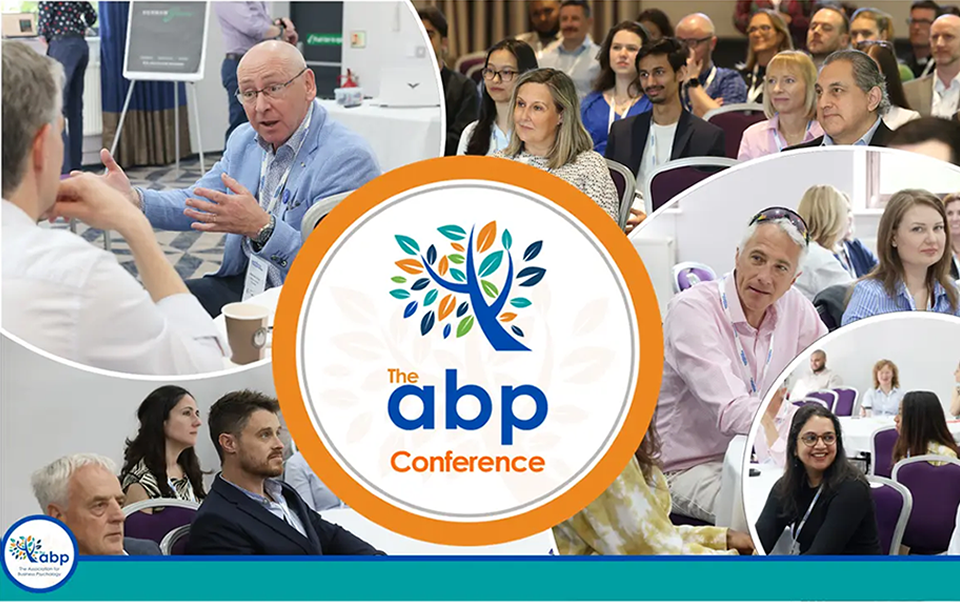
Claire Lish – Chair of the ABP – and Mark McCarthy – Conference Dean – took to the stage to set the tone and expectations for the next two days.
In seperate introductions, they discussed the lessons practitioners can learn from case study successes and failures, and encouraged the delegates to get involved in the networking activities. Whilst there are plenty of insights and learnings from the event’s presenters, much of the magic of the ABP and its members is found in those informal coffee breaks, dinners and outside of the keynotes.
 The first keynote was the exceptional Professor Adrian Furnham.
I’ve met Adrian previously at an event we both spoken at, and he was as warm, charming and insightful as the first time I’d had the privilege of hearing him speak.
His presentation discussed one of my personal bugbears: the divide between academics and real world business (and the snobbery that sometimes seems to eminate from both sides).
Strandling areas of coach, consulting and academia, Prof. Furnham was perfectly placed to showcase the importance of being able to translate between these tribes in a way that makes a measureable difference.
In one case study, he highlighted how an academic team had developed an exceptional psychometric assessment. However, they’d not considered who they were selling it to.
This key failure of STP (segment, target, position) in their strategic marketing meant that they burned through resources and money without a coherent approach to going to market – and the venture stalled.
The opening panel discussion was hosted by Laura Senior Garcia, and included clients from SAP, Barclays, Gilead Sciences, and Azets.
Together, they explored the mistakes organisations are making today, and how investing in human capability creates real-world advantage for organisations.
I attend many conferences and, almost without exception, they all claim to discuss the opportunities that AI support and augmentation can provide to people. In practice, the undertone of these events is about cost saving, efficiency and, occasionally, productivity improvements. Rarely is the human side actually the star of the show.
From the outset of the event, it was clear that the ABP conference was going to buck this trend.
The panel openly disucssed AI adoption rates and change management failures because of the lack of involvement and engagement from the end-users of the technology. The resulting individual threat responses are an area that business psychology can add real value.
I shouldn’t have been surprised by this. Afterall, the conference theme for 2026 was Enabling Human Capabilities.
But it’s still refershing to see this as more than just a slogan or strapline for an event.
Moving into the first speaker sessions, I didn’t have the opportunity to observe as I was delivering my own keynote on Constellation.
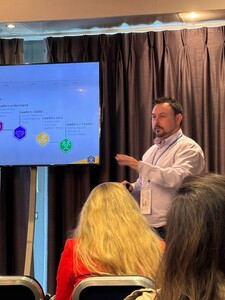 At the same time, the first collection of finalists for the ABP Biz Psych Cup were presenting their cases, Heather David was discussing humble behaviour and worplace performance, and Hazel Turner-Anderson was addressing the ‘dark side’ of organisational values – a session I would’ve loved to attend.
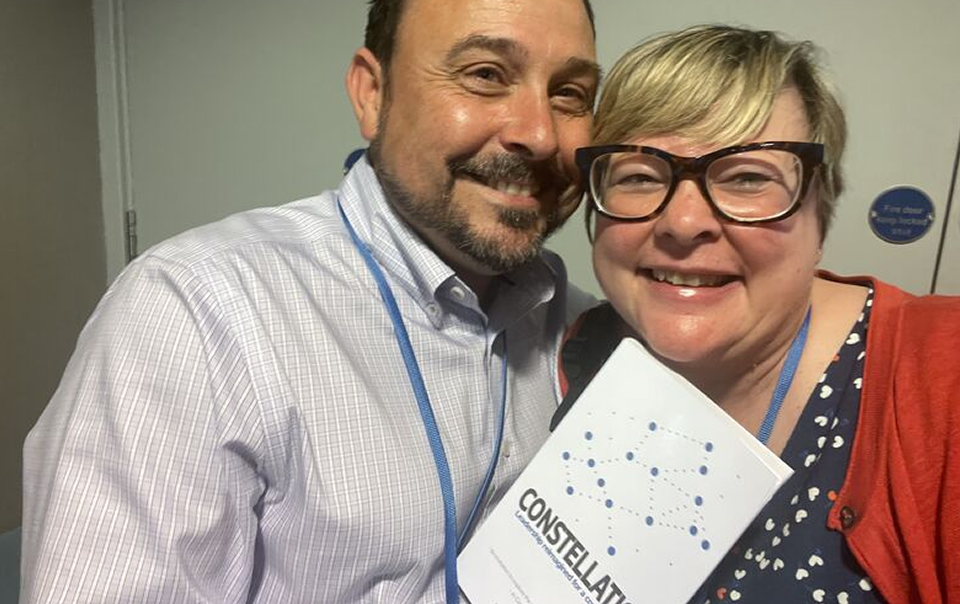
My own session – titled: Who leads when the leader is not in the room? – explored the primary research behind my debut book, Constellation: Leadership reimagined for a connected age.
The premise looked at the history of leadership theory and how our academic studies act as a time capsule of the businesses of their day and the leadership styles that are encouraged at those times.
But our world has changed. It’s is more volatile and unpredictable, with individuals having multiple responsibilities and reporting lines, working in matrixed organisations. Constellation Leadership shows how to build cultures with Intent and Motive to provide strong scaffolding for the future of leadership.
After a break, the talks continued with Jan von Osch discussing systemic intervetions for burnout at work, Jessica Ross focused on psychological safety and organisational effectiveness, and the second tranche of Biz Psych Cup finalists presented their case studies.
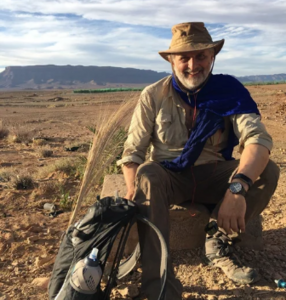 I chose to listen to Steve Carter, with the intriguing title of Rewild Yourself: Why resilience and vitality emerge when we stop over-managing human nature.
In a conference focused on organisational psychology, it felt like this subject might be an outlier and its discussion points more aligned with nature and ecology. As I walked in, Steve was opening the session discussing a small piece of land at the end of his garden – and I thought my assumptions had been proven correct. I was mistaken.
Steve provided a masterclass on the influence of systems on individuals, using conservation and rewilding as examples of current approaches.
Conservation, he argues, is about trying to reestablish an environment back to a previous (or perceived previous) state of being. Invariably, this approach tends to fail. Thousands of trees are replanted, but many don’t grow.
Rewilding is a more stable approach, where nature and the individual plants, animals and ecology work in harmony to build a new system – much like the strip of land left alone at the foot of his garden.
When applying this to organisations, Steve cited several examples of how we approach this today, where the focus is often placed on the individual.
For example, in stressful work environments, we encourage individual training for grit, resilience and cognitive load management – but rarely address the issues systemically. We ask people to be more fireproof, but don’t put out the figurative fires in the workplace.
When we do tackle the system, we try to beat it into submission. We approach it like conservation, applying policies, processes, and approaches that evoke a bygone era, rather than being radical in the new world.
An excellent discussion, which I’m glad I stumbled across.
The morning of day one is still not complete, with a third round of talks available.
Samantha Walsham focused on shaping culture through systems, and Kelly Millburn discussed embedding values to strengthen culture.
I chose to join Dawn Nelson‘s talk. Working with the prison service, Dawn’s work at PeopleScout examined how to improve applications for roles in the Prison Service.
Traditionally, applications have over-indexed on “known” roles, such as Prison Officer. But there are lots of other roles available, which are lesser known.
The intervention the created acted as a decision tree based on the traits and attributes of the job seeker. It wasn’t part of selection and didn’t provide any guidance on the interview process.
Instead, the user could answer questions and, based on those inputs, would be presented with three matching roles that might suit them.
The results were impressive, with applications for these lesser-known roles increasing, and engagement levels with the hosting website seeing huge improvements.
Day One: Afternoon
Dr Jules Goddard is a fellow of the Centre for Management Development at London Business School, where he has taught competitive strategy and creative marketing for 30 years. His afternoon keynote was everything that you’d expect from that brief resume.
In the session, Jules discussed “quirky logic”; the idea that innovation can come from bringing our unique experiences, perspectives, and ways of thinking into the room rather than trying to fit a mold. Business psychology can be a source for unconventional advantages through embracing our quirks, creativity, and the ideas that come with it.
Obliquity by John Kay was the take away book to add to the reading list.
Moving into the breakout speaker sessions, Dr Joanne Gray discussed a systems approach to proactivity, Lou Obi-Drake asked where the fun is in a hybrid workplace, Josh Gelb and Hilary Kitson talked about improving the hiring experience through transparency, simplicity and capability, and a panel of Caitlin Cooper, Alex Myers and Mike Wright debated psychological safety and performance.
I attended Dr Joanne Gray’s session, where there was insightful discussion about what it means to be proactive.
But the real value was in the space between job descriptions (many AI-generated) which asked for proactivity as a requirement and the reality of being proactive in the workplace – particularly where this might lead to isolation, resentment or bullying.
It’s an interesting juxtaposition that employers ask for proactivity but often have processes, systems and behaviours that actively dissuade (and even penalise) the approach.
The final speakers of afternoon included Dr Amanda Super (discussing self-compassion in well-being) and Dr Fiona Beddoes-Jones. I attended this latter session.
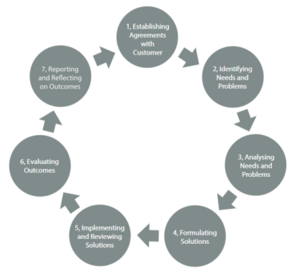 During the talk, Dr Beddoes-Jones shared the consulting cycle approach used at Birkbeck and how it can improve the relationships between consultants and contracted clients. It also generated much debate from the audience around the importance of contracting, finding evidence and analysing appropriately.
The session was popular with many of the student attendees, as unvarnished truths about validity, reliability and even accuracy in the business world were shared openly.
We might leave university with our psychological models and frameworks all ready for work. But the reality is that many organisations are interested in what works, rather than how it works – even when the things that work might be less valid or even pseudoscientific.
As day one was brought to a close, the venue transformed ready for the ABP Awards.
There was so many people to recognise, awards to be given and questionable dancing that this could be an article in its own right.
For the purpose of this article, we’ll keep to the conference itself and move on to day two.
Day Two: Morning
The audience seemed a little more subdued at the start of day two – possibly due to too many wines and too little sleep. But that wasn’t going to stop the ABP conference from being exceptional.
ABP Vice Chair, Dr Dawn H Nicholson (remember the ‘H’, as there’s another Dr Dawn Nicholson out there in the world), opened the day’s session and re-emphasised the importance of keeping humans in consideration as the world changes quickly.
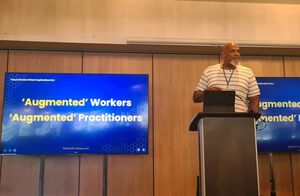 The first keynote of the day was always going to be great. I’m a huge fan of John Amaechi OBE – from both his playing days in the BBL and NBA, and for his work as a psychologist and author. The Promises of Giants is, perhaps, my favourite contemporary leadership book, and one that I have gifted and recommended more times than I can remember.
Whilst the subject of his keynote was focused on our adapting to this new world of augmentation with technology (and questioning what that means for practitioners of psychology), a personal highlight was a seemingly innocuous Mentimeter quiz to identify the cutest kitten.
On showing four variants with cute poses and names, the results showed at 33%, 14%, 24%, and 29% respectively. This, we are told, is a pattern that is reproduced across geographies, industries and ages, despite the names and on-screen position of the kittens being changed. Amaechi has conducted this experiment 28,000 times.
Then came the reveal: The quiz meant nothing. There was no hidden AI manipulation of the images or vote. It was a standard out-of-the-box quiz from Mentimeter, created over 12-years ago.
When asked about whom you voted for, the audience members’ reactions are a predictable mix of “x was just cute”, “y is a full body pose”, “z is looking into the camera”, etc.
Herein lies the insight. We see (and justify) what we want to see. An audience member immediately challenged the methodology of the research, claiming that a ranking approach would be more accurate.
But there is nothing accurate. It is a meaningless quiz to which we each apply our own meaning. This proved to be a great (and practical) example of how we allow our own decision biases to creep in to our subjectve views of the world and how we must be cognizant of this.
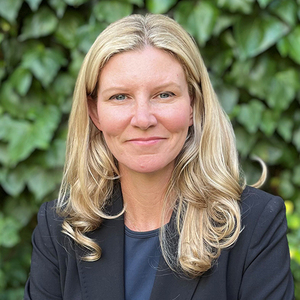 The second keynote of the morning came from Lucy Standing, who challenged convention and talked about redefining how people view aging and approach their careers after midlife in an ageist workscape.
This wasn’t in a moral manner – although there are clear reasons why age discrimination is morally (not to mention legally) questionable – but was delivered with evidence and objectivity.
The reality, Lucy argues, is that the age of retirement was set in the 1940’s, when life expectancy was lower and there were 7 people supporting each pensioner. In the not too distant future, that figure is heading for just 2.
The chartered psychologist and trained career coach laid out the challenge we’re facing as a society and the bias blocks that are preventing many individuals from returning to the work place – both at an individual and system level.
Food for thought and a clear, objective view on why so many older people can bring experience and new approaches to the workplace.
Next up were four breakout rooms for speaking sessions, which delegates could choose to attend.
I’ve had the pleasure of seeing Christos Malliaros and Gerianne de Klerk deliver keynotes for MindShift Labs previously. Their session on values and everyday experiences at work was sure to be great.
Katie Thomas‘ work on psychometrics is also exceptional, and I’m familiar with the remit and approach of Sten10. This left me with a choice between Dr Stewart Desson from Lumina Learning and Alexandra Church, who was discussing neurodiversity as a strategic advantage.
To be completely transparent, there are many discussions about neurodiversity and, although I’m familiar with Lumina (I am a practitioner), the insights into reducing evaluation bias intrigued.
The session was useful, highlighting some of the pitfalls in psychometric assessments that suggest items/questions which can be interpreted as negative traits. With Lumina Spark, the delta between, for example, introversion and extraversion is demonstrably less than other models – including NEO and IPIP.
After a break, a further four rooms were available for discussions.
Talks ranging from exploring uncertainty in leadership (Annabelle White) to being bold in your career (Rosemary Mclean and Valerie Rowles) to psychological safety at the top (Alex Myers) all sounded perfect subjects.
But I opted for a group discussion on the ABP insights report into Trust, Work, and Organisational Systems: A Shifting Landscape.
Clodagh O’Reilly, Daria Briggs, Nick Hayter and Sarah Walsh delivered a team delivered a superb summary of the insights from the ABP’s latest report, highlighting the importance of trust, which is becoming more conditional, dynamic, and unevenly distributed. The report’s data suggest employees increasingly base trust on their direct experience of organisational systems, leadership behaviour, and decision-making consistency, rather than on organisational identity or messaging alone.
The morning wasn’t quite finished, but I had to, unfortunately, leave at this point. A bridge between Nuneaton and Rugby had collapsed overnight, and was causing carnage on my travel route north. Reluctantly, I headed towards the tube station.