
ou know I’m a big fan of the railway – but I missed a massive event yesterday that wouldn’t have happened without trains.
Paperback Book Day!
What’s that got to do with the railway?
I’m glad you asked.
Sit down, remove your bag from the seat next to you, and have your tickets ready.
Before the 19th century, books had heavy wooden covers bound in leather and stitched to a spine.
This makes them very durable – but, also, very very heavy.
People started to travel on trains and took books to pass the time.
After all, you could still easily spend a week or more in a carriage – especially if you were in the US.
But carrying those heavy tomes on trains could be cumbersome and took up vital luggage space. (Remember: we were still wearing huge hats that needed the luggage racks).
Then three things consipired to fix this issue.
Firstly, production methods improved.
Steam-powered presses and cheap paper production meant that mass produced literature was easier and more affordable.
Secondly, “yellowbacks” – cheap novels – became available.
These short stories and “dime novels” became popularised on US trains for mass audiences.
Thirdly, Albatross (a German company) and, later, Penguin Books, standardised the typology, pricing and overall size of books (pocket-sized, to fit in, well, a pocket), and made them available specifically in railway stations to target travellers.
With the advent of World War II, soldiers were deployed via train.
And having books that would fit in a standard uniform pocket quickly lead to the first audience segmentation of literature.
⭕ Services Central and Forces Book Clubs sprung up to review paperbacks produced for army personnel. Penguin paperbacks were so popular, that they were carried in the same bag as a gas mask.
⭕ Puffin Picture Books opened in 1940 to provide children’s paperbacks for those being evacuated to the countryside
⭕ In a time of paper scarcity, paperbacks could be pulped and re-used for future production (giving rise to ‘pulp fiction’ – cheap, sensational stories printed on rough wood-pulp paper)
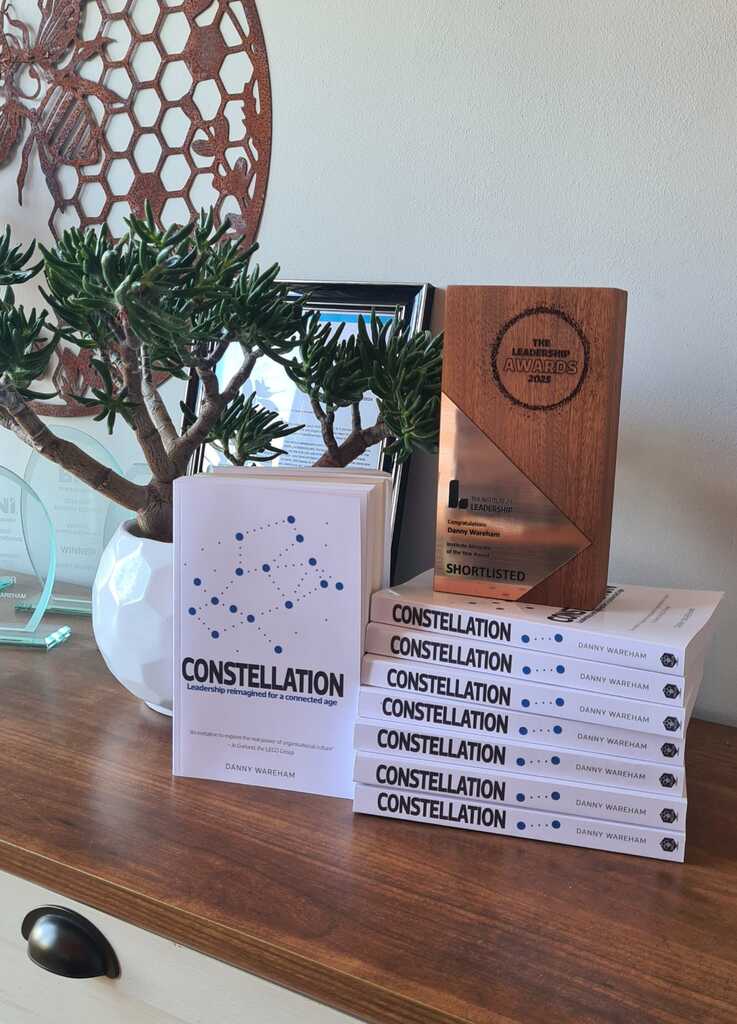
So, when you’re reading Constellation, remember: it’s not just about the railway culture example on page 31 (or my occasional #TrainSelfie)
If it weren’t for the railways, Constellation might only be available bound in oak and leather.