
The Accidental Saboteur: Culture From The CIA
16 February 2026
In 1944, as the Second World War ground across continents, a slim document circulated quietly among selected operatives. It did not describe explosives or covert assassinations. Instead, it offered something subtler. It explained how ordinary people could undermine an organisation from within.
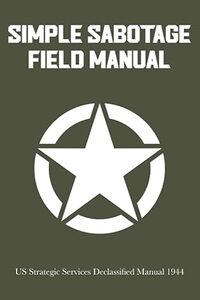
The publication was produced by the Office of Strategic Services, the wartime intelligence body that would later become the Central Intelligence Agency. Its title was the Simple Sabotage Field Manual.
The purpose of the manual was straightforward: to teach citizens in enemy-controlled territories how to degrade industrial output, disrupt administrative efficiency, and weaken institutional cohesion without attracting attention. Rather than calling for dramatic acts of destruction, it provides a process and encourages restraint.
 Readers are instructed to insist on following channels. To refer matters to committees. To reopen decisions that have already been made. To demand written orders. To quibble over wording. To multiply paperwork. To delay delivery until every part is complete. To reward inefficiency and sideline competence. To misunderstand instructions. To be irritable, but not overtly insubordinate.
What might be familiar to the modern reader is not the historical context of the manual. It is the familiarity of the approaches.
Many of these behaviours now appear as unintentional features of ordinary corporate life. They surface in governance frameworks, in meeting cultures, in compliance regimes, in performance systems. They are rarely malicious. They are often defended as prudent, professional, or thorough. Yet their cumulative effect mirrors precisely what the manual intended: slowed decision-making, diffused accountability, diminished morale, and strategic drift.
The manual was written to destabilise enemy regimes. But its insights read like a diagnostic tool for contemporary organisational dysfunction.
Bureaucracy as Respectable Obstruction
One of the manual’s earliest instructions is to insist on doing everything through “channels.”
In this approach, short-cuts are to be discouraged and informal coordination is to be treated with suspicion. Matters should be referred upward or sideways as often as possible.
In wartime, this advice aimed to clog the machinery of production. In modern organisations, similar dynamics frequently arise from risk aversion and status protection rather than sabotage. Formal pathways become moralised. Escalation becomes a sign of diligence. Procedural compliance substitutes for judgement.
When three approvals are required where one would suffice, it is rarely framed as obstruction. It is framed as governance. When decisions must travel through layers of review, the delay is justified as rigour. Over time, however, these layers accumulate. Initiative slows and local problem-solving atrophies. Individuals learn that acting decisively carries greater personal risk than deferring to process, and so behaviours that slow that organisational machinery become normalised.
The field manual also recommends multiplying paperwork and applying regulations to the last letter. This advice understood something psychologically astute: rules create friction that feels legitimate. Unlike open dissent, procedural insistence carries no obvious stigma. A rallying cry of “trust the process” can lead to a blockage in progress while appearing conscientious.
In contemporary organisations, especially those operating under regulatory pressure or reputational scrutiny, employees learn that this friction and adherence to process is rewarded more reliably than creative resolution. A culture forms in which compliance is visible and measurable, while initiative is ambiguous and therefore risky.
But the impact is not sudden. There’s no dramatic collapse or implosion of the business. Instead, there is a gradual suffocation.
Meetings as Instruments of Delay
Another set of recommendations concerns meetings and committees. Readers of the manual are advised to refer matters to committees for further study and to ensure that these committees are as large as possible. They are encouraged to make speeches at length and to raise irrelevant issues. Previously settled decisions should be reopened for reconsideration.
The organisational psychology underpinning this advice is striking. Large groups diffuse responsibility and the extended discussion creates the impression of engagement. Meanwhile, reopening settled questions destabilises momentum, but feels as though we’re considering a holistic view of the situation. None of these behaviours appears overtly destructive, and each can be justified as inclusive or thorough.
Many modern organisations often reproduce these patterns unintentionally. The impulse to include all stakeholders can expand decision forums beyond functional size. Leaders who equate visibility with value may speak at length rather than facilitate clarity. Participants may reintroduce earlier concerns in order to signal diligence or protect themselves from future blame.
The cumulative effect is delay without explicit opposition. Energy is expended in circulation rather than execution, work becomes performative, and meetings become a theatre in which participation substitutes for progress.
In the original context, such behaviours were designed to reduce output in factories and administrative offices. In contemporary settings, they reduce cognitive bandwidth. When we don’t have the available cognitive energy, attention fragments and strategic focus diffuses. The result is that teams can leave discussions less certain than when they entered.
What makes these dynamics powerful is their plausible virtue. Consultation is admirable and feels inclusive. Thoroughness is desirable and indicates governance. The manual recognised that obstruction is most effective when it masquerades as responsibility.
Precision Over Progress
The manual also advises readers to insist on perfect work (often in relatively unimportant products), to send back minor flaws for refinishing, and to delay delivery until every element is complete. The intent was to slow output without appearing uncooperative. Quality becomes the justification for inertia.
In modern organisations, this pattern often emerges in environments where error carries disproportionate reputational or political cost. Teams learn that imperfect delivery invites scrutiny, whereas delay can be explained as diligence. Over time, perfectionism shifts from craft to control. Energy is expended polishing artefacts that have little strategic consequence, while meaningful progress stalls.
There is a distinction between excellence and anxiety. Excellence seeks to create value. Anxiety seeks to avoid criticism. When anxiety dominates, the safest course of action is rarely forward movement. Refinement offers safety and helps us appear to be productive.
The result is an organisation that appears busy yet struggles to ship, to decide, or to commit.
Undermining Competence
Among the more socially astute recommendations in the manual is the suggestion to promote inefficient workers and to discriminate against efficient ones. New workers are to be given incomplete instruction. Skills are not to be passed on.
This guidance recognised something uncomfortable about institutional life: morale and productivity depend less on formal structure than on the informal distribution of status. When competence is sidelined and mediocrity is protected, the signal to the wider group is clear. Performance is not the organising principle.
In contemporary organisations, this dynamic rarely presents itself as deliberate favouritism. It often emerges from conflict avoidance, political alignment, or the quiet discomfort that high performers can evoke. Competent individuals can threaten established hierarchies and expose underperformance simply by contrast. Rewarding compliance rather than contribution can feel stabilising in the short term.
Yet the longer-term effect is corrosive. High performers withdraw discretionary effort or leave entirely. Capability gaps widen. Informal cynicism spreads. The organisation does not need an external adversary; it manufactures its own attrition.
Strategic Incompetence
The manual’s final cluster of advice borders on the absurd. Readers are encouraged to misunderstand orders, to ask endless questions, to provide lengthy and incomprehensible explanations, to fill out forms incorrectly, and to blame tools or equipment for poor results.
Behind the absurdity lies a clear psychological insight. Plausible incompetence is difficult to confront. These behaviours create friction without triggering open conflict and allow obstruction to masquerade as confusion.
In modern workplaces, similar behaviours can arise in environments where accountability is uneven or where clarity is persistently lacking – particularly when organisations are attempting to increase inclusivity, happiness and belonging. If expectations are ambiguous, misunderstanding becomes defensible. If consequences are inconsistent, effort becomes negotiable. Over time, a culture can form in which learned helplessness is safer than initiative.
None of this requires malicious intent. It requires only misaligned incentives and a tolerance for ambiguity.
Why These Patterns Persist
The enduring relevance of the Simple Sabotage Field Manual is not that organisations are filled with covert agents. It is that the behaviours it describes are self-protective in low-trust systems.
When individuals perceive high personal risk and low psychological safety, they gravitate toward strategies that minimise exposure. Referring decisions upward diffuses responsibility. Expanding meetings distributes accountability. Demanding written orders protects against future blame. Perfectionism shields against criticism. Procedural insistence signals loyalty to the system rather than judgement within it.
Each behaviour makes sense at the individual level. Collectively, they erode performance.
The manual understood that institutions are rarely destroyed through dramatic confrontation. They are weakened through accumulation. Delay compounds. Friction multiplies. Energy dissipates.
Modern organisations often recreate these conditions inadvertently when governance eclipses purpose, when inclusion is confused with niceness, or when compliance is rewarded more reliably than contribution.
A Different Discipline
If sabotage thrives in environments defined by fear and diffusion, the antidote isn’t found in heroic leadership or charismatic intervention. It is found within disciplined clarity.
Clarity of decision rights reduces the need for excessive channels. Clarity of purpose constrains unnecessary debate. Clarity of accountability diminishes the appeal of strategic incompetence. Clarity of standards distinguishes excellence from anxiety-driven perfectionism.
This does not require the removal of process. It requires the right-sizing of it. Governance must serve value creation rather than substitute for it.
Leaders and teams might begin with a simple diagnostic question: if a hostile actor wished to slow us down from within, which of our existing habits would they exploit?
- Where do decisions circulate longer than necessary?
- Where is procedural adherence valued more visibly than thoughtful judgement?
- Where have meetings replaced momentum?
- Where is competence muted to preserve harmony?
The purpose of asking these questions is not to accuse, but to encourage leaders to notice.
The 1944 manual assumed intentional sabotage. But modern dysfunction is more subtle. It is sustained by habit, by misplaced virtue, and by systems that reward caution over contribution.
The irony is stark. The behaviours once recommended to weaken enemy regimes now appear in organisations that are attempting to compete, to innovate, and to grow.
Sabotage no longer requires intent. It requires only inattention.
Reorienting Around a North Star
In my own work on Constellation Leadership, I have argued that organisations do not fail primarily because they lack process. They falter because they lack coherent orientation.
When a clear and shared north star is absent, people look for safety in structure. They escalate decisions because they are unsure of strategic boundaries. They expand meetings because alignment feels fragile. They default to perfectionism because they cannot confidently judge what “good enough” looks like in service of a larger aim. They protect mediocre performance because harmony feels easier than confronting ambiguity.
A compelling and consistently reinforced vision changes this dynamic.
When this direction-giving anchor is explicit, decision-making can be decentralised without chaos. Individuals understand the direction of travel and can exercise judgement locally. Debate becomes anchored to shared intent rather than personal preference. Process becomes a scaffold rather than a shield.
Constellation Leadership rests on a simple premise: in complex environments, coordination does not depend solely on hierarchy. It depends on shared orientation. Just as travellers once navigated by fixed points in the night sky, teams require a stable reference against which to calibrate action.
A coherent north star reduces the psychological drivers that make sabotage-like behaviours attractive. If people understand where the organisation is headed and why, the perceived personal risk of action diminishes. If contribution is clearly linked to purpose, compliance loses its status as the safest strategy.
Clarity does not eliminate disagreement. It does not remove governance. It does not make meetings unnecessary. What it does is restore proportion. Discussions are evaluated against strategic direction. Standards are tied to impact. Accountability is framed in service of the mission rather than in defence of position.
In this sense, the antidote to accidental sabotage is stronger coherence.
Vigilance Without Cynicism
The existence of the Simple Sabotage Field Manual is a historical curiosity. Its endurance as a mirror for organisational life is more unsettling.
No leader sets out to create suffocation. Few employees intend to obstruct progress. Yet systems shape behaviour, and behaviour accumulates. Without conscious design, organisations drift toward caution, diffusion, and defensive process. This is driven by our innate psychosocial risk management processes as humans.
The task, then, is neither to search for saboteurs nor to eliminate governance. It is to cultivate cultures in which clarity outweighs fear, in which competence is recognised, and in which purpose provides orientation.
If a 1944 intelligence document can still diagnose our modern challenges, it suggests that the mechanics of institutional decay are remarkably stable. The more important question is whether we are willing to design with equal intentionality for vitality.
Sabotage was once a wartime tactic. Today, its patterns surface quietly in meeting rooms, inboxes, and approval chains.
The difference is that we are not powerless observers. We can choose to notice. We can choose to simplify. We can choose to align.
And when a shared north star is strong enough, the gravitational pull of accidental sabotage weakens.
25 Examples from the Manual
- Insist on doing everything through “channels.” Never permit short-cuts to be taken in order to expedite decisions.
- Make “speeches.” Talk as frequently as possible and at great length.
- When possible, refer all matters to committees, for “further study and consideration.” Attempt to make the committees as large as possible—never less than five.
- Bring up irrelevant issues as frequently as possible.
- Haggle over precise wordings of communications, minutes, resolutions.
- Refer back to matters decided upon at the last meeting and attempt to re-open the question of the advisability of that decision.
- Demand written orders.
- “Misunderstand” orders. Ask endless questions or engage in long correspondence about such orders. Quibble over them when you can.
- Do everything possible to delay the delivery of orders. Even though parts of an order may be ready beforehand, don’t deliver it until it is completely ready.
- In making work assignments, always sign out the unimportant jobs first.
- Insist on perfect work in relatively unimportant products; send back for refinishing those which have the least flaw. Approve other defective parts whose flaws are not visible to the naked eye.
- When training new workers, give incomplete or misleading instructions.
- To lower morale and with it, production, be pleasant to inefficient workers; give them undeserved promotions. Discriminate against efficient workers; complain unjustly about their work.
- Hold conferences when there is more critical work to be done.
- Multiply paper work in plausible ways.
- Start duplicate files.
- Multiply the procedures and clearances involved in issuing instructions, pay checks, and so on. See that three people have to approve everything where one would do.
- Apply all regulations to the last letter.
- Do your work poorly and blame it on bad tools, machinery, or equipment. Complain that these things are preventing you from doing your job right.
- Never pass on your skill and experience to a new or less skilful worker.
- Snarl up administration in every possible way. Fill out forms illegibly so that they will have to be done over; make mistakes or omit requested information in forms.
- Give lengthy and incomprehensible explanations when questioned.
- Act stupid.
- Be as irritable and quarrelsome as possible without getting yourself into trouble.
- Misunderstand all sorts of regulations concerning such matters as rationing, transportation, traffic regulations.
References
Edmondson, A. C. (2018). The fearless organization: Creating psychological safety in the workplace for learning, innovation, and growth. John Wiley & Sons.
Janis, I. L. (1982). Groupthink: Psychological studies of policy decisions and fiascoes (2nd ed.). Houghton Mifflin.
Office of Strategic Services. (1944). Simple sabotage field manual. (Declassified document; ISBN 979-8419246508).
Staw, B. M., Sandelands, L. E., & Dutton, J. E. (1981). Threat-rigidity effects in organizational behavior: A multilevel analysis. Administrative Science Quarterly, 26(4), 501–524. https://doi.org/10.2307/2392337
Weber, M. (1978). Economy and society: An outline of interpretive sociology (G. Roth & C. Wittich, Eds.). University of California Press. (Original work published 1922)